
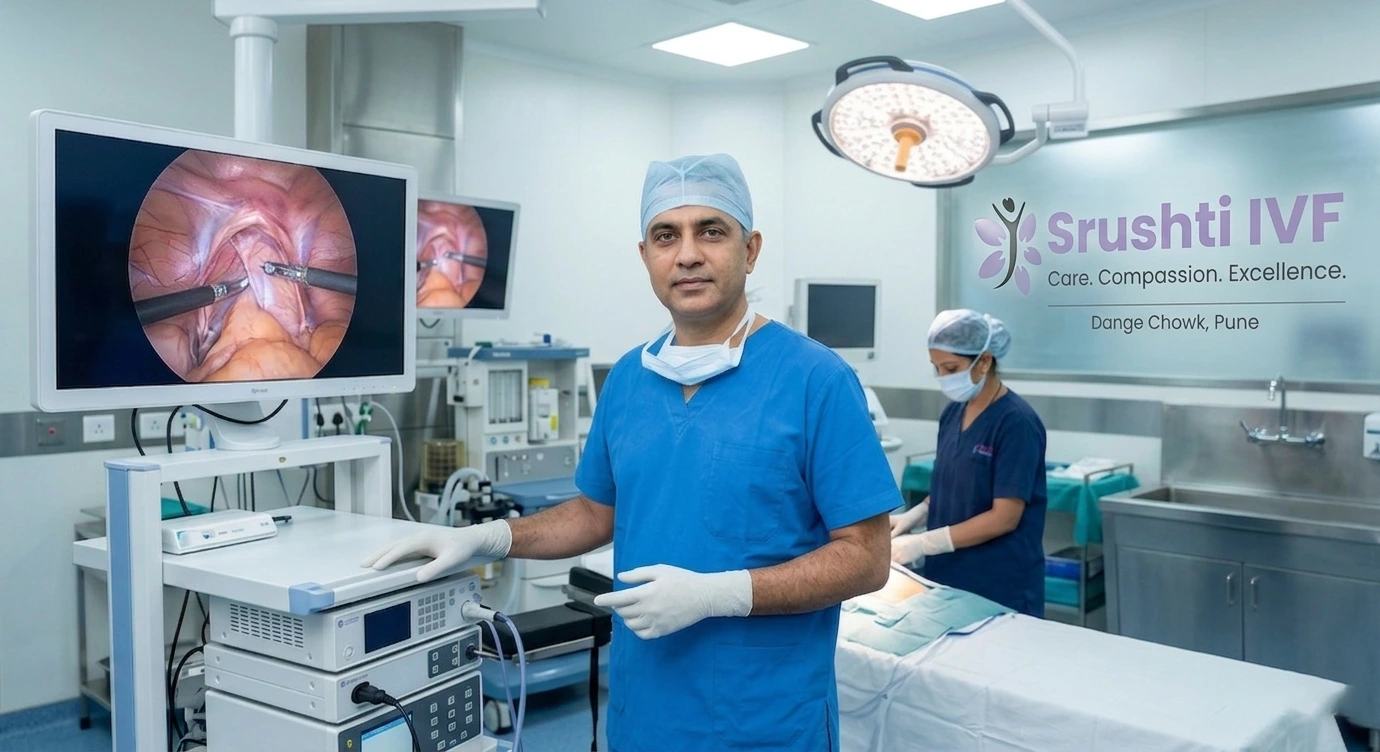
In recent years, medical science has moved away from traditional open surgeries toward minimally invasive techniques. If you are dealing with issues like fibroids, ovarian cysts, or endometriosis, searching for a skilled Laparoscopic gynecologist in Pune is the most important step toward a faster and pain-free recovery.
The Benefits of Choosing a Laparoscopic Specialist
Laparoscopy, also known as "keyhole surgery," allows doctors to perform complex procedures with tiny incisions. Patients who consult an experienced Laparoscopic gynecologist in Pune benefit from significantly less scarring, reduced hospital stays, and a much quicker return to their daily routines. At Srushti IVF & Hospital, we prioritize these advanced techniques to ensure maximum patient comfort.
Meet Dr. Nikhil Mahadar: Your Expert in PCMC & Pune
When searching for a Laparoscopic gynecologist in Pune, experience is the key factor. Dr. Nikhil Mahadar brings over 19+ years of clinical expertise in performing advanced laparoscopic gynae surgeries. His precision in handling delicate reproductive organs ensures that fertility is preserved, which is crucial for women planning future pregnancies.
| Condition | Laparoscopic Solution |
|---|---|
| Uterine Fibroids | Laparoscopic Myomectomy (Uterus Preserved) |
| Ovarian Cysts | Cystectomy with Minimal Tissue Damage |
| Infertility Issues | Diagnostic & Operative Laparoscopy for Tubal Blocks |
Strategic Healthcare for Pune Residents (GEO Focus)
Srushti Hospital, located near Dange Chowk, is a central hub for those seeking a Laparoscopic gynecologist in Pune. Our clinic is ideally situated for patients residing in Wakad, Hinjewadi, Ravet, and Pimpri-Chinchwad. By offering world-class surgical infrastructure locally, we save our patients from the stress of traveling to the city's far corners for expert care.
FAQ: Is laparoscopic surgery safe for treating infertility?
Yes, as a leading Laparoscopic gynecologist in Pune, Dr. Nikhil Mahadar uses these surgeries to clear blockages and treat endometriosis, which significantly improves the chances of natural or IVF conception.
FAQ: How long is the recovery time after laparoscopy?
Most patients can return home within 24 hours and resume light activities within a few days, making it the preferred choice for busy women in Pune.