
IUI (Intrauterine Insemination) is a simple, minimally invasive fertility treatment in which specially prepared sperm are gently placed inside the uterus around the time of ovulation. This helps more motile sperm reach closer to the egg and increases the chances of natural conception.
Typically planned around ovulation after a short phase of monitoring and semen preparation.
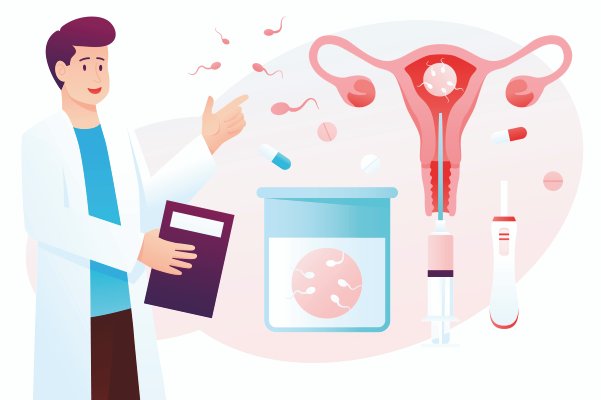
In a natural cycle, sperm need to travel from the vagina through the cervix, into the uterus and up to the fallopian tubes to meet the egg. In IUI, carefully processed (washed and concentrated) sperm are placed directly into the uterus using a thin catheter, at the right time during ovulation.
This reduces the distance sperm have to travel and increases the number of healthy, motile sperm near the egg. IUI can be done in a natural cycle, or in combination with mild ovulation induction medicines to encourage the development of one or a few good quality follicles.
The procedure itself is quick, usually painless or only mildly uncomfortable, and you can go home after a short resting period.
Before starting IUI, your doctor will usually evaluate both partners – including semen analysis, tubal patency tests (like HSG/SSG), ultrasound and basic hormonal profile – to ensure that IUI is appropriate and safe for you.
A typical IUI cycle takes about 2–3 weeks from the start of your period until the pregnancy test. Here is how the process usually looks.
We begin with a detailed discussion about your medical history, menstrual pattern, previous treatments and reports. Tests such as semen analysis, tubal patency assessment and hormone profile are reviewed to confirm that IUI is a suitable option for you.
Depending on your case, IUI may be done in a natural cycle or with ovulation induction medicines like Letrozole, Clomiphene or low-dose gonadotropin injections. These help in growing one or a few good quality follicles at the right time.
You will be called for one or more ultrasound scans to track follicle growth and endometrial thickness. When the follicles reach the desired size, an ovulation trigger injection may be given to time the IUI accurately.
On the day of IUI, the semen sample (partner or donor) is processed in the lab to select motile and healthy sperm. The prepared sample is then gently placed into the uterus using a thin, soft catheter – a quick procedure that usually takes only a few minutes.
After the procedure, supportive medicines (like progesterone) may be prescribed to help the uterine lining. Around 14 days later, a blood or urine pregnancy test is done to check if conception has occurred.
In younger women with open tubes and reasonably good semen parameters, pregnancy rates per IUI cycle are usually around 10–15% per cycle. Results depend on age, diagnosis, egg reserve and sperm quality. Your doctor will discuss realistic expectations with you.
IUI is generally very safe and well tolerated. Some women may experience mild cramping, light spotting or bloating around the time of the procedure or after taking stimulation medicines.
When IUI is combined with ovulation induction, there is a small risk of multiple pregnancy (twins), especially if several follicles develop. This is why follicle growth is monitored closely and medication doses are adjusted with care.
In some cases, if 3–4 well-planned IUI cycles do not result in pregnancy, or if there are additional factors such as severely reduced sperm count, blocked tubes or very low egg reserve, your doctor may advise moving to IVF/ICSI for better chances.
Here are some common questions couples ask before starting an IUI cycle.
One IUI cycle generally takes around 2–3 weeks – from the start of your period, through monitoring scans and ovulation trigger, up to the IUI procedure and the waiting period before the pregnancy test. The exact duration can vary depending on how your follicles grow and respond to medicines.
Most women find IUI to be only mildly uncomfortable, similar to a Pap smear. You may feel slight cramping when the catheter passes through the cervix, but the procedure is usually over within a few minutes. You can resume normal activities the same day unless your doctor advises otherwise.
Success rates depend on your age, diagnosis, egg reserve and sperm parameters. In favourable cases, IUI can offer around 10–15% chance of pregnancy per cycle. Your doctor will review your reports and give you an individualised estimate.
For younger women with open tubes and mild issues, it is common to try about 3–4 well-timed IUI cycles before moving to IVF. In women with advanced age, poor egg reserve or significant male factor, your doctor may suggest a shorter IUI trial or recommend going directly to IVF/ICSI.
Take your medicines exactly as prescribed, attend all monitoring scans on time, avoid smoking and excessive alcohol, maintain a healthy weight, manage stress and aim for regular sleep. These lifestyle factors, along with proper timing and good lab preparation, can support better outcomes with IUI.
Share your reports and fertility history with our team and receive a personalised IUI or fertility treatment plan tailored to your situation.