
Pre-Implantation Genetic Screening (PGS), now often referred to as PGT-A, is an advanced technique where embryos created through IVF are tested for chromosomal abnormalities before transfer. The aim is to identify embryos with the correct number of chromosomes, which may help improve implantation chances and reduce miscarriage risk in selected couples.
Usually offered after detailed counselling based on age, history, and previous treatment outcomes.
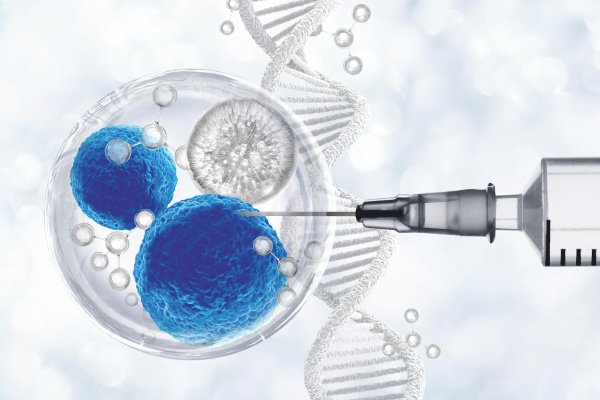
In PGS, embryos created through IVF are allowed to grow in the lab to the blastocyst stage. A few cells are then gently removed from the outer layer (trophectoderm) and sent for advanced genetic testing to check the number of chromosomes.
Embryos with the correct chromosomal count (euploid) are more likely to implant and continue as healthy pregnancies, while those with extra or missing chromosomes (aneuploid) are more likely to result in failed implantation or miscarriage.
The tested embryos are usually frozen while results are awaited. Later, selected embryos with normal chromosomal results are chosen for transfer in a subsequent cycle.
PGS does not test for all genetic diseases and does not guarantee a healthy baby. It focuses on screening for chromosomal number abnormalities. Your doctor and genetic counsellor will explain what PGS can and cannot detect in your specific case.
PGS is integrated into an IVF/ICSI cycle and involves additional steps in the embryology lab for biopsy and genetic analysis.
Your fertility history, age, previous IVF outcomes and miscarriage history are reviewed. The role, benefits, limitations, and costs of PGS are explained, often with input from a genetic counsellor.
Eggs are retrieved and fertilised using IVF or ICSI. Embryos are cultured in the lab until the blastocyst stage (usually Day 5 or Day 6), when they have enough cells for safe biopsy.
Using a microscope and micromanipulation tools, a few cells are gently removed from the outer layer of the blastocyst. The embryo is then immediately frozen (vitrified) to preserve it while the biopsied cells are sent for genetic testing in a specialised laboratory.
The biopsied cells are analysed to check chromosome number. The report categorises embryos as chromosomally normal (euploid), abnormal (aneuploid), or sometimes mosaic (mixed cell lines). Based on these results, embryos are prioritised for future transfer.
In a subsequent cycle, the uterine lining is prepared and a selected chromosomally normal embryo is thawed and transferred into the uterus. A blood pregnancy test follows 12–14 days later to check for implantation.
PGS can improve the selection of embryos but does not guarantee a pregnancy or a completely problem-free baby. Some couples may have few or no chromosomally normal embryos available, particularly at older ages or with low egg reserve. Your team will guide you through realistic expectations based on your individual profile.
Embryo biopsy and freezing are advanced procedures that require an experienced IVF and genetics team. Although considered safe, there is a small theoretical risk of embryo damage or loss during biopsy, freezing or thawing.
PGS involves additional cost and may result in no embryos suitable for transfer in some cycles, which can be emotionally challenging. Also, not all genetic or structural conditions are detected by PGS – it mainly screens chromosome number.
Decision-making should include careful counselling about benefits, limitations, alternatives and the emotional impact of the results.
Common questions couples ask about chromosomal screening of embryos.
No. PGS (or PGT-A) screens for chromosome number abnormalities (like extra or missing chromosomes). Testing for specific inherited diseases (such as thalassemia or single-gene disorders) is called PGT-M or PGT-SR and follows a different protocol. Your team will clarify which type of testing is relevant for you.
No. PGS reduces the risk of chromosomal errors but cannot check every possible condition. Many pregnancy factors are still influenced by maternal health, uterine environment and other genetic or non-genetic factors. It increases information, not certainty.
In appropriate candidates, PGS may improve the chance of success per transfer and reduce miscarriage risk, but this depends on age, egg reserve, and the number of embryos available. It does not overcome very poor egg quality or extremely low egg numbers.
When performed by experienced teams at the blastocyst stage, embryo biopsy is considered safe and widely used worldwide. Current data have not shown major long-term health issues directly linked to the biopsy itself, but ongoing monitoring and research continue.
No. PGS is usually suggested in specific situations such as advanced age, recurrent failures or miscarriages. For young couples with good prognosis, routine PGS may not always be necessary. Your doctor will help decide if it truly adds value in your case.
Share your age, fertility history, miscarriage records and previous IVF reports with our team to understand whether PGS / PGT-A could be a helpful part of your personalised treatment plan.